ERA® DIGITAL DISTRIBUTED ANTENNA SYSTEM (DAS)

The only DAS digitally connecting every major RAN vendor through both CPRI and O-RAN.

A new standard for in-building wireless connectivity

Fast, reliable in-building connectivity is no longer optional — it’s expected. Across stadiums, airports, hospitals, offices, factories, and campuses, people demand seamless, high-performance mobile service everywhere they go.

A distributed antenna system brings mobile operator signals into a building or venue and distributes them throughout the space to provide reliable cellular coverage and capacity.

The ANDREW® ERA® Distributed Antenna System meets that demand with a proven all-digital architecture and native CPRI and Open RAN (O-RAN)—an industry first, and the only DAS to digitally connect every major RAN vendor over both. ERA is deployed and operating in live networks today.

Concert audience using mobile phones inside a connected venue

Why ERA?

One platform. All digital. Intelligent to operate. Proven at scale.

ERA simplifies in-building wireless with a flexible, software-defined architecture designed for operators, venues and enterprise networks.

One platform

Any venue. Any operator. Any technology. One infrastructure, approved by global operators, for public wireless, private networks and public safety—from 2G through 5G.

Local. Campus. Cloud-RAN. Place the RAN where it makes sense—on-site, across a campus or centralized remotely—with low-, medium- and high-power radios matched to the venue.

All digital

CPRI and O-RAN. Both. Today. Evolvable. An industry first: ERA digitally connects every major RAN vendor to the DAS through CPRI and O-RAN.

No analog RF in the headend or transport. No radio heads, POI systems or RF combining in the headend, reducing traditional sources of PIM. The signal remains digital from the baseband to the DAS radio.

Performance that’s measured. Throughput, signal-quality and latency gains validated in live, high-density deployments.

Smaller. Cooler. Greener. Less headend space, fewer RF components, lower power consumption and reduced cooling.

Software-defined operations

Simple to deploy. Intelligent to operate. Zero-touch configuration, software-defined routing, real-time visibility and built-in security—from deployment through operations.

Lower CAPEX. Lower OPEX. Fewer RF components, software-based expansion and fewer site visits.

Proven at scale

Proven. Not promised. Digital CPRI and O-RAN connecting operators in live networks today.

Digital since 2014. More than a decade of digital DAS innovation—and still advancing.

Performance and efficiency

ERA by the numbers

An all-digital architecture designed to reduce infrastructure and energy requirements while improving network performance.

Up to 90%

less headend space

Up to 55%

lower power and cooling

Up to 40%

less access-point energy

Up to 98%

lower latency

Proven in the field

ERA case studies

See how ERA delivers coverage, capacity and simpler operations in some of the world’s most demanding venues.

View all case studies ›

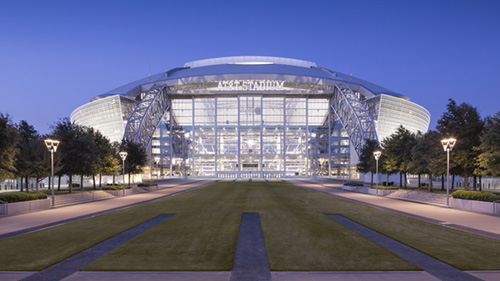
AT&T Stadium in Arlington, Texas

Stadium · Arlington, Texas

AT&T Stadium

ERA helped AT&T Stadium build the world’s largest indoor DAS network while dramatically reducing space, power and cooling needs.

Read the case study ›

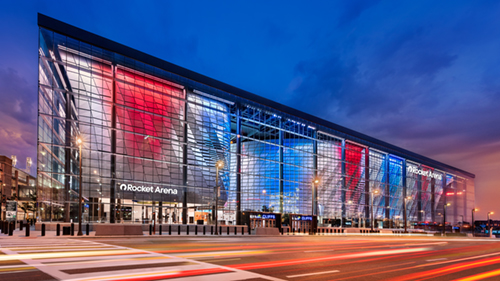
ERA digital DAS at Rocket Arena, Cleveland

Arena · Cleveland, Ohio

Rocket Arena

ERA helped create a frictionless wireless experience for Cleveland Cavaliers fans while providing room for future network growth.

Read the case study ›

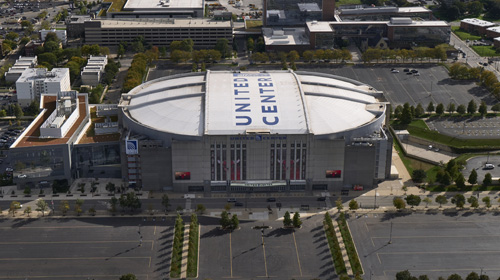
Aerial view of the United Center in Chicago

Arena · Chicago, Illinois

United Center

ERA upgraded legacy infrastructure for 5G while reducing equipment space, cooling requirements and power utilization.

Read the case study ›

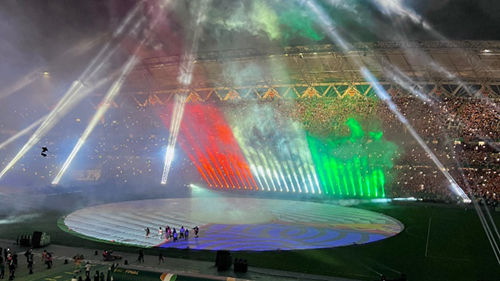
Connected football stadium in Ivory Coast

Stadiums · Ivory Coast

Ivory Coast Stadiums

ANDREW and Leadcom/STA helped Orange Ivory Coast deliver reliable, high-capacity connectivity during AFCON 2024.

Read the case study ›

All-digital architecture

How ERA works

ERA keeps the signal digital from the operators’ networks to the DAS radios, using ordinary fiber or CAT cabling and centralized software management.

era-how-it-works

01

MNO

Operator RAN connects digitally to ERA over CPRI or O-RAN.

02

Headend/Transport

Processes and transports digital signals over fiber or CAT cabling.

03

Radios

Convert the digital signal to RF.

04

Antennas

Transmit the signal over the air to mobile devices.

Resources

Learn more about ERA

Watch the ERA overview or explore the all-digital DAS platform in the product brochure.

View all resources ›

Video · Under 3 minutes

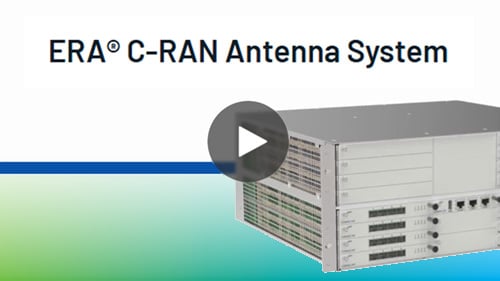
ERA® explained

See how ERA’s all-digital DAS works in under three minutes.

Watch video ›

Brochure · CO-200056

ERA® brochure

Explore ERA architecture, capabilities, coverage and capacity.

Download brochure ›

Common questions

ERA frequently asked questions

Quick answers about ERA architecture, network support, efficiency and real-world deployment.

What is ERA digital DAS?

ERA is ANDREW’s all-digital distributed antenna system (DAS): a modular platform that distributes multi-operator cellular signal digitally throughout a building, with native CPRI and O-RAN support across 2G through 5G.

Does ERA support CPRI and O-RAN?

Yes—natively. ERA digitally connects every major RAN vendor to the DAS through CPRI and O-RAN, eliminating the need for an analog RF headend.

What networks, generations and IoT technologies does ERA support?

ERA supports public, private and public-safety networks across 2G, 3G, 4G and 5G FDD and TDD, plus cellular IoT protocols including LTE Cat M1 and NB-IoT. Its architecture is carrier-, band- and technology-agnostic.

How much can ERA reduce space and energy use?

Compared with a traditional analog DAS, ERA can reduce the headend footprint by up to 90% and lower power and cooling requirements by as much as 55%. Its next-generation access points use up to 40% less energy.

Is ERA deployed in live networks today?

Yes. ERA operates in live, high-density venues on a platform backed by more than a decade of ANDREW digital DAS deployments. Live deployments have demonstrated approximately 30% better signal quality and throughput and up to 98% lower latency.

How is a digital DAS different from a traditional analog DAS?

A traditional analog DAS typically requires radio heads, point-of-interface (POI) systems, and RF combining hardware in the headend. ERA keeps the signal digital from the baseband to the DAS radio, reducing RF hardware, headend space, power, and cooling.

Take your connectivity to the next level.

Let’s discuss how ANDREW can help get you there.